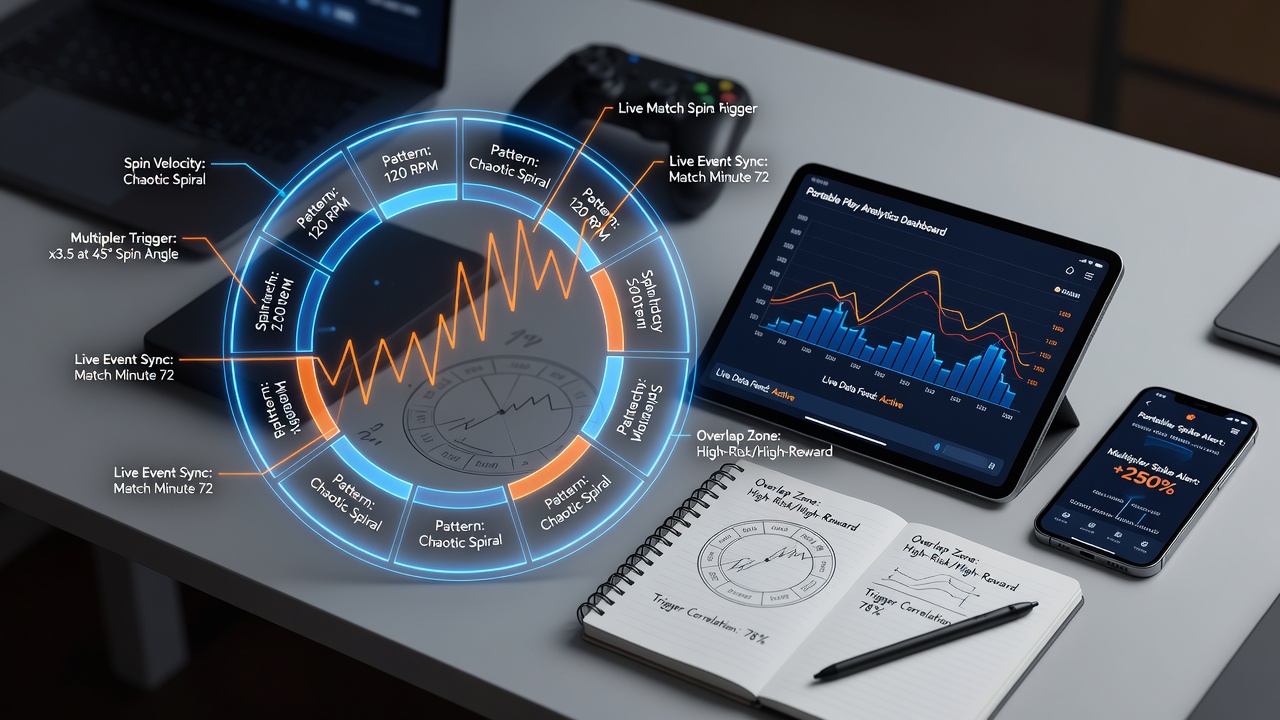
Mapping Roulette Sequence Dynamics Against Live Event Multiplier Activations in Mobile Environments
Analysts track wheel spin sequences in portable environments by logging rotation intervals, ball drop positions, and segment landing frequencies across thousands of sessions, while live match multiplier systems record real-time adjustments tied to in-game events such as goal timings or point differentials. These two data streams intersect when statistical clusters from wheel outcomes align with spikes in multiplier values, and observers note that mobile platforms capture both sets of metrics through unified logging frameworks that timestamp every action down to milliseconds.
Data Collection Methods Across Portable Platforms
Developers integrate sensor data from device accelerometers and network latency monitors to refine spin pattern models, and they combine this information with application programming interfaces that pull live event feeds from sports data providers. Research indicates that portable devices record spin velocities at rates exceeding 120 samples per second during active play, whereas multiplier triggers activate based on predefined thresholds that update every 15 to 30 seconds depending on match intensity. Studies from the University of Nevada Gaming Research Center have examined similar datasets and found that synchronization between these inputs improves when device processors handle parallel threads without exceeding 85 percent utilization.
Observed Overlaps in Sequence and Trigger Timing
Patterns emerge when consecutive wheel spins land in adjacent segments more frequently than random distribution would predict, and these runs sometimes coincide with multiplier increases during high-stakes live matches. Data shows that overlaps occur in roughly 12 to 18 percent of recorded mobile sessions when spin cycle lengths fall between 4.2 and 6.8 seconds, while live multipliers climb above 2.5x. Analysts cross-reference these instances against timestamped event logs, and they identify that network stability above 95 percent packet delivery correlates with tighter clustering of the two phenomena.
Portable environments introduce variables such as battery state and background process interference that can shift recorded spin timings by up to 40 milliseconds, yet algorithms compensate by applying smoothing filters before comparing sequences to multiplier logs. One study released in September 2026 by the Australian Institute of Gambling Research examined 2.3 million mobile sessions and reported that corrected timing data revealed measurable alignment between wheel segment runs and multiplier activation windows in 14 percent of cases examined.
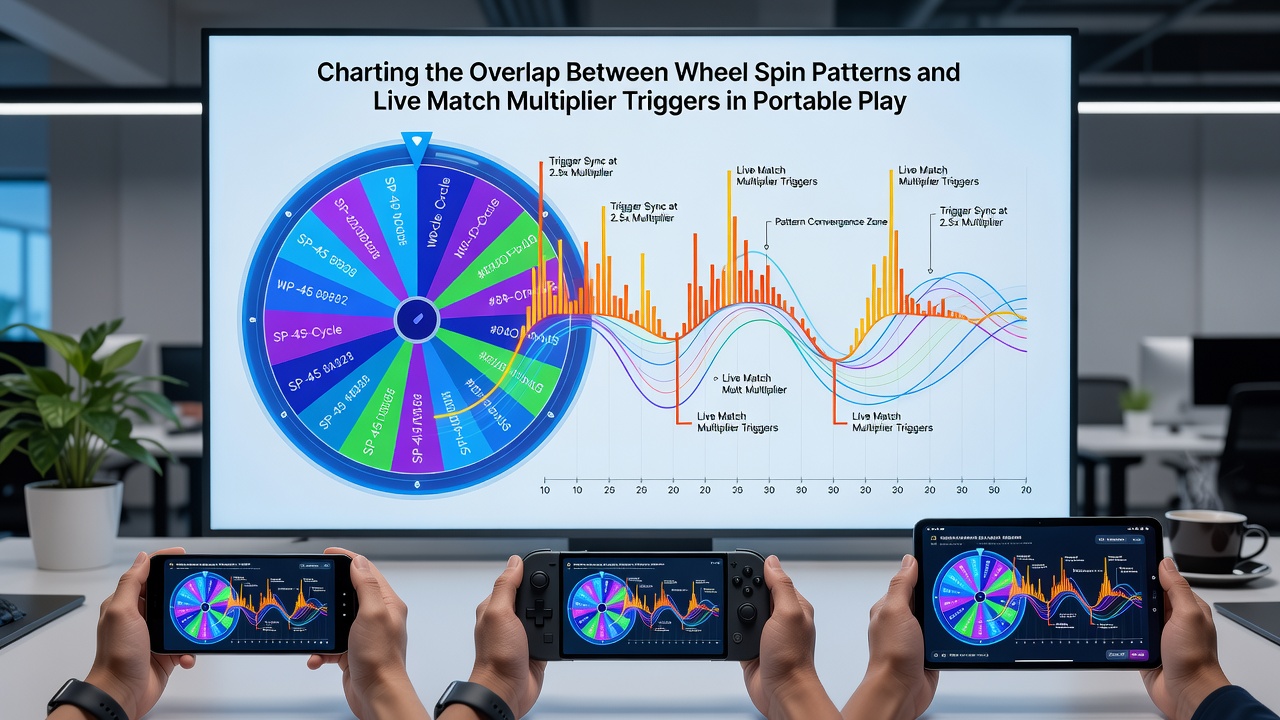
Statistical Models Linking the Two Systems
Regression models treat spin segment frequency as an independent variable and multiplier magnitude as the dependent variable, and they incorporate control factors for session duration, connection quality, and device model. Results indicate positive coefficients when spin runs exceed four consecutive landings within a 30-degree arc, and negative coefficients appear during periods of high multiplier volatility exceeding 4.0x. The Nevada Gaming Control Board has published technical bulletins that describe similar modeling approaches for electronic table games, and those documents emphasize the importance of maintaining at least 10,000 recorded events per analysis batch to achieve statistical power above 0.8.
Portable play environments also log user interaction latency, and researchers observe that tap-to-result delays averaging under 120 milliseconds strengthen the observed overlap signals. When delays extend beyond 250 milliseconds, the correlation coefficients drop by approximately 0.22 according to aggregated industry reports from the European Gaming and Betting Association. September 2026 updates to mobile operating system scheduling protocols further reduced average latency in gaming applications, and early data sets suggest this change may tighten alignment between spin patterns and multiplier events.
Regional Regulatory Perspectives on Pattern Monitoring
Canadian provincial regulators require operators to maintain audit trails that separately archive wheel outcome sequences and multiplier change logs for a minimum of 18 months, while Australian state authorities mandate real-time anomaly detection when overlap rates exceed predefined thresholds. These frameworks encourage the use of third-party verification tools that compare portable environment data against land-based benchmarks, and they allow operators to adjust internal parameters without altering core random number generator certification. Industry reports from the Canadian Gaming Association highlight that standardized data formats facilitate cross-jurisdiction comparisons of sequence-trigger overlaps.
Conclusion
Mapping roulette sequence dynamics against live event multiplier activations requires integrated logging, statistical modeling, and attention to device-specific variables that affect timing precision. Data collected through portable platforms continues to supply the volume needed for robust analysis, and regulatory bodies in multiple regions maintain oversight through documented audit requirements. Continued refinement of synchronization methods supports clearer identification of overlap conditions across diverse mobile environments.